AMAZON WATCH: We're thrilled to welcome Adam Zuckerman to the Amazon Watch team as our newest Environmental and Human Rights Campaigner. Adam will be working to support indigenous community opposition to new oil concessions in the Western Amazon.
Showing posts with label Amazon Watch:. Show all posts
Showing posts with label Amazon Watch:. Show all posts
Thursday, January 24, 2013
Takin' it to the Richmond Streets@AmazonWatch

Wednesday, October 24, 2012
DON'T AUCTION THE AMAZON
|





Monday, October 15, 2012
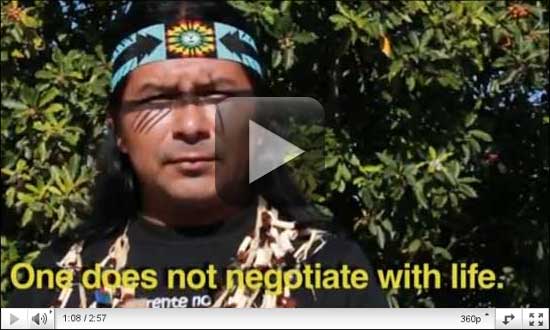
Amazon Watch: Standing with Indigenous Peoples, Defending the Rainforest
For over 15 years, Amazon Watch has stood with the indigenous peoples of the Amazon Basin, helping build a global movement of forest guardians, while using creative and effective strategies to confront urgent threats to one of our living planet's most precious resources.
Visit www.AmazonWatch.org to learn more
Visit www.AmazonWatch.org to learn more
Incase You were wondering: The Amazon: The World's Largest Rainforest

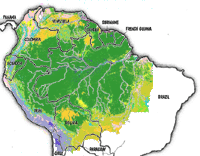
Reflecting environmental conditions as well as past human influence, the Amazon is made up of a mosaic of ecosystems and vegetation types including rainforests, seasonal forests, deciduous forests, flooded forests, andsavannas. The basin is drained by the Amazon River, the world's largest river in terms of discharge, and the second longest river in the world after the Nile. The river is made up of over 1,100 tributaries, 17 of which are longer than 1000 miles, and two of which (the Negro and the Madeira) are larger, in terms of volume, than the Congo (formerly the Zaire) river. The river system is the lifeline of the forest and its history plays an important part in the development of its rainforests.
HISTORY
|

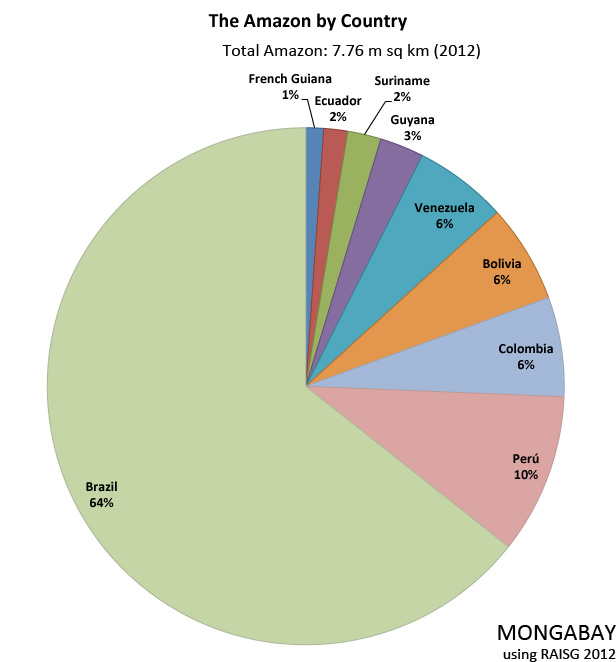
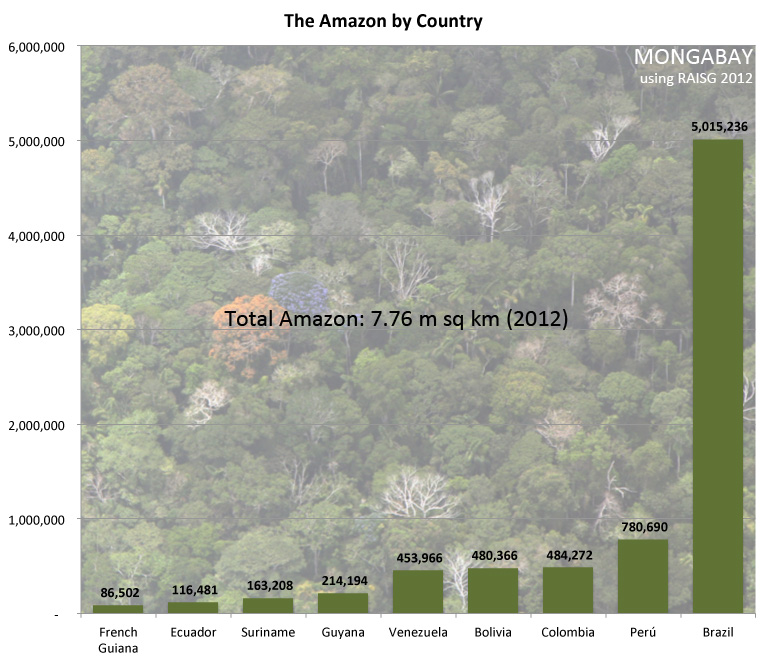
About ten million years ago, waters worked through the sandstone to the west and the Amazon began to flow eastward. At this time the Amazon rainforest was born. During the Ice Age, sea levels dropped and the great Amazon lake rapidly drained and became a river. Three million years later, the ocean level receded enough to expose the Central American isthmus and allow mass migration of mammal species between the Americas.
The Ice Ages caused tropical rainforest around the world to retreat. Although debated, it is believed that much of the Amazon reverted to savanna and montane forest (see chapter 3-Ice Ages and Glaciation). Savanna divided patches of rainforest into "islands" and separated existing species for periods long enough to allow genetic differentiation (a similar rainforest retreat took place in Africa. Delta core samples suggest that even the mighty Congo watershed was void of rainforest at this time). When the ice ages ended, the forest was again joined and the species that were once one had diverged significantly enough to be constitute designation as separate species, adding to the tremendous diversity of the region. About 6000 years ago, sea levels rose about 130 meters, once again causing the river to be inundated like a long, giant freshwater lake.
THE AMAZON RIVER TODAY
Today the Amazon River is the most voluminous river on Earth, eleven times the volume of the Mississippi, and drains an area equivalent in size to the United States. During the high water season, the river's mouth may be 300 miles wide and every day up to 500 billion cubic feet of water (5,787,037 cubic feet/sec) flow into the Atlantic. For reference, the Amazon's daily freshwater discharge into the Atlantic is enough to supply New York City's freshwater needs for nine years. The force of the current -- from sheer water volume alone -- causes Amazon River water to continue flowing 125 miles out to sea before mixing with Atlantic salt water. Early sailors could drink freshwater out of the ocean before sighting the South American continent.
The river current carries tons of suspended sediment all the way from the Andes and gives the river a characteristic muddy whitewater appearance. It is calculated that 106 million cubic feet of suspended sediment are swept into the ocean each day. The result from the silt deposited at the mouth of the Amazon is Majaro island, a river island about the size of Switzerland.
THE AMAZON RAINFOREST
While the Amazon Basin is home to the world's largest tropical rainforest, the region consists of a number of ecosystems ranging from natural savanna to swamps. Even the rainforest itself is highly variable, tree diversity and structure varying depending on soil type, history, drainage, elevation, and other factors. This is discussed at greater length in the rainforest ecology section.
THE CHANGING AMAZON
|
This transition from a remote backwater to a cog in the global economy has resulted in large-scale deforestation and forest degradation in the Amazon — more than 1.4 million hectares of forest have been cleared since the 1970s. An even larger area has been affected by selective logging and forest fires.
Conversion for cattle grazing is the biggest single direct driver of deforestation. In Brazil, more than 60 percent of cleared land ends up as pasture, most of which has low productivity, supporting less than one head per hectare. Across much of the Amazon, the primary objective for cattle ranching is to establish land claims, rather than produce beef or leather. But market-oriented cattle production has nonetheless expanded rapidly during the past decade.
Industrial agricultural production, especially soy farms, has also been an important driver of deforestation since the early 1990s. However since 2006 the Brazil soy industry has had a moratorium on new forest clearing for soy. The moratorium was a direct result of a Greenpeace campaign.
Mining, subsistence agriculture, dams, urban expansion, agricultural fires, and timber plantations also result in significant forest loss in the Amazon. Logging is the primary driver of forest disturbance and studies have shown that logged-over forests — even when selectively harvested — have a much higher likelihood of eventual deforestation.Logging roads grant access to farmers and ranchers to previous inaccessible forest areas.
Deforestation isn't the only reason the Amazon is changing. Global climate change is having major impacts on the Amazon rainforest. Higher temperatures in the tropical Atlantic reduce rainfall across large extents of the Amazon, causing drought and increasing the susceptibility of the rainforest to fire. Computer models suggest that if current rates of warming continue, much of the Amazon could transition from rainforest to savanna, especially in the southern parts of the region. Such a shift could have dramatic economic and ecological impacts, including affecting rainfall that currently feeds regions that generate 70 percent of South America's GDP and triggering enormous carbon emissions from forest die-off. These emissions could further worsen climate change.
18 Years of Fighting Chevron
Breaking News: Amazon's Indigenous Groups Win Against Chevron: US Supreme Court Rejects Case-18 Years of Fighting Chevron

Newagepfactivism.com: We will like to thank all the activists and people who made this possible. We Will also like to thank the US supreme Court. This is an amazing victory.Thank you for everything. We love you for ever and ever.
Chevron fails to block $18 billion Ecuador judgment
Chevron's attempt to overturn the $19 billion judgment against it in Ecuador for polluting the Amazon rainforest won't get a hearing by the US Supreme Court.
The nation's high court this week rejected the US oil company's appeal of a federal court ruling, with no explanation.
It's the latest twist in a case that has been going on for 18 year, originally brought against Texaco (bought by Chevron in 2001).
Farmers have been seeking redress for damages from 16 billion gallons of toxic waste sludge dumped into rivers and streams from 1964-1990. Texaco left the country in 1992.
Thousands of people depend on that water for drinking, bathing, and fishing
In February 2011, an Ecuadorean judge imposed damages of $8.6 billion against Chevron – the fine has more than doubled since then because the court required Chevron to make a public apology, which it hasn't.
Chevron filed an appeal in New York to block the judgment, saying it was illegal and unenforceable under the state's law – and a federal judge took its side in March 2011.
But earlier this year, an appeals court overturned that decision, noting US courts can't interfere with courts from other countries. But Chevron didn't give up, it appealed again - this time to the Supreme Court.
Chevron has been adamant about fighting what it believes is a judgment brought by a corrupt foreign court. The irony is that Chevron actually petitioned to have the case moved from the US to Ecuador in the first place.
"While Chevron is disappointed that the Court denied our petition, we will continue to defend against the plaintiffs' lawyers' attempts to enforce the fraudulent Ecuadorean judgment, and to further expose their misconduct," the company told Reuters.
"The company want to prevent a "disturbing trend" where lawyers win big money judgments against U.S. companies in corrupt foreign courts, and then seek to enforce them in countries where the companies operate," says Reuters.
If it all sounds complicated, it is, but the bottom line is this is a closely watched case because it sets a precedent that would impact other pending pollution cases against oil companies.

Environmentalist Donald Moncayo shows his glove after conducting a test made on an affected field in Lago Agrio, Ecuador in this January 25, 2011 file photograph. Chevron Corp on October 9, 2012 lost a U.S. Supreme Court bid to block an $18.2 billion judgment against it in Ecuador in a case over pollution in the Amazon jungle. The Supreme Court did not give any explanation for its decision, which rejected Chevron's appeal of a lower court ruling. The lower court in January had thrown out an injunction blocking enforcement of the Ecuadorean judgment.
REUTERS/Guillermo Granja/Files
REUTERS/Guillermo Granja/Files
When the Ecuadorian judge first ruled in favor of indigenous groups, they said:
"Today's case is historic and unprecedented. It is the first time Indigenous people have sued a multinational corporation in the country where the crime was committed and won."
Since then, the government of Ecuador and the United Nations Development Programme signed a historic deal to leave an estimated 846 million barrels of crude oil untapped beneath Yasuní National Park, a World Biosphere Reserve since 1989.
SOURCE

A waste pit filled with crude oil left by Texaco drilling operations years earlier lies in a jungle clearing near the Amazonian town of Sacha, Ecuador in this October 21, 2003 file photograph. Chevron Corp on October 9, 2012 lost a U.S. Supreme Court bid to block an $18.2 billion judgment against it in Ecuador in a case over pollution in the Amazon jungle. The Supreme Court did not give any explanation for its decision, which rejected Chevron's appeal of a lower court ruling. The lower court in January had thrown out an injunction blocking enforcement of the Ecuadorean judgment.
REUTERS/Lou Dematteis/Files
REUTERS/Lou Dematteis/Files
Subscribe to:
Posts (Atom)